
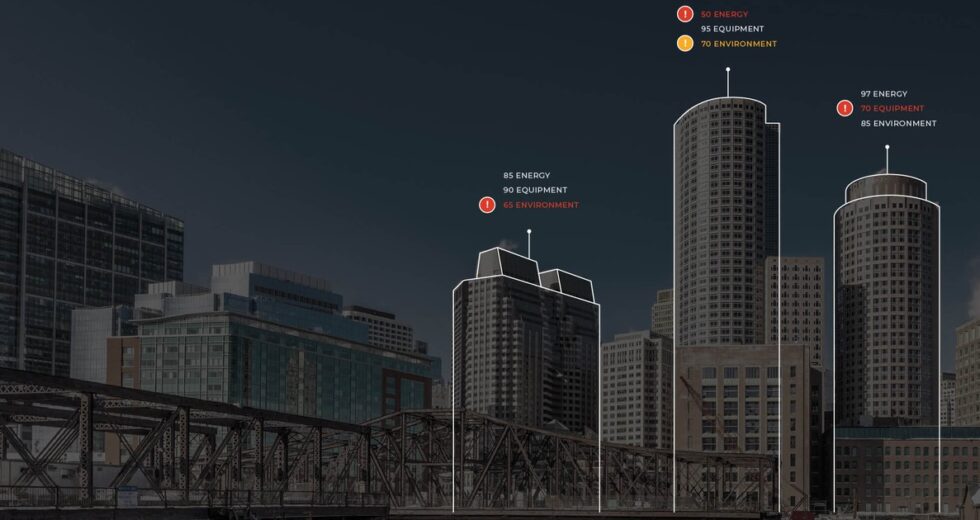
Clockworks Analytics is one of the AI tools buyers often evaluate when they are looking for AI facilities management software. This review looks at the product from a practical buyer perspective: what it appears best suited for, which workflows it may improve, what questions to ask before a pilot, and how it compares with other tools in the same category.
The goal is not to crown a universal winner. A strong AI software decision depends on data quality, team workflow, compliance constraints, integration requirements, and the level of human review required in building optimization, equipment analytics, and maintenance intelligence. For building owners, facilities teams, and property operations, the best choice is usually the platform that fits the existing operating model with the least friction.
Quick verdict: who Clockworks Analytics is best for
Clockworks Analytics is worth shortlisting if your team needs help with building optimization, equipment analytics, and maintenance intelligence. It is especially relevant for building owners, facilities teams, and property operations that want a focused AI system rather than a generic chatbot. The most important question is whether the platform supports the exact tasks your team repeats every week.
- Best fit: teams that already have a defined building optimization, equipment analytics, and maintenance intelligence process and want to reduce manual work.
- Potential value: Clockworks Analytics may speed up building optimization, equipment analytics, and maintenance intelligence through better routing, drafting, analysis, or follow-through.
- Watch-out: Clockworks Analytics still needs human ownership, documented review steps, and clear escalation rules.
- Buying angle: run a Clockworks Analytics pilot with real AI facilities management software examples before committing to a long contract.
What Clockworks Analytics does
In the AI facilities management software category, buyers typically look for tools that can collect context, analyze information, generate recommendations or drafts, and push work back into the systems a team already uses. Clockworks Analytics should be judged by how well it supports that complete loop rather than by a demo alone.
For building owners, facilities teams, and property operations, the highest-value use cases usually sit where information is repetitive but still requires judgment. Good AI software should make the routine parts faster while leaving sensitive, strategic, or regulated decisions to the responsible team.
Core use cases to evaluate
- Automating repeatable steps in building optimization, equipment analytics, and maintenance intelligence.
- Summarizing complex AI facilities management software information into a format a busy team can act on.
- Improving building optimization, equipment analytics, and maintenance intelligence handoffs between departments, systems, or specialists.
- Reducing time spent on low-value manual review while preserving Clockworks Analytics auditability.
- Creating a more consistent AI facilities management software process for new team members and distributed teams.
Strengths
The main reason to consider Clockworks Analytics is category focus. Vertical AI tools can often provide better workflow defaults than general-purpose AI systems because they are designed around the language, data, and user roles of a specific industry.
- More relevant workflow assumptions for AI facilities management software.
- A clearer buyer conversation around Clockworks Analytics implementation and measurable outcomes.
- Potential integrations with the systems already used by building owners, facilities teams, and property operations.
- Better fit for teams that need repeatable building optimization, equipment analytics, and maintenance intelligence processes rather than one-off prompting.
- A narrower AI facilities management software scope that can make governance and training easier.
Limitations and risks
Even a strong AI tool can disappoint when teams skip data preparation, workflow mapping, and change management. Clockworks Analytics should be evaluated with messy real-world examples, not only polished demo data.
- Clockworks Analytics pricing may depend on volume, seats, enterprise features, or implementation scope.
- Clockworks Analytics integrations can be the difference between a useful system and an isolated demo.
- AI output for AI facilities management software can be incomplete, overconfident, or poorly matched to local policy.
- Teams need documented ownership for Clockworks Analytics review, approval, and exception handling.
- Vendor claims should be tested against your own building optimization, equipment analytics, and maintenance intelligence data and workflows.
Pricing questions
Public pricing may not be enough to estimate total cost for Clockworks Analytics. Buyers should ask about implementation, usage limits, onboarding, support, security review, and the cost of adding more users or workflows later.
- Is Clockworks Analytics pricing based on users, usage volume, locations, documents, conversations, or transactions?
- Are Clockworks Analytics integrations, implementation, premium support, or sandbox environments included?
- What happens if Clockworks Analytics usage grows quickly after the building optimization, equipment analytics, and maintenance intelligence pilot?
- Can the team start with one AI facilities management software workflow before expanding?
Implementation checklist
- Pick one measurable building optimization, equipment analytics, and maintenance intelligence use case for the first pilot.
- Prepare representative AI facilities management software examples, including ordinary cases and edge cases.
- Define what Clockworks Analytics can do automatically and what requires human review.
- Confirm Clockworks Analytics security, privacy, data retention, and permission controls.
- Agree on building optimization, equipment analytics, and maintenance intelligence success metrics before the pilot starts.
- Review Clockworks Analytics performance after two weeks and after the first full operating cycle.
Clockworks Analytics alternatives
Teams comparing Clockworks Analytics should also look at Facilio, BrainBox AI. These tools serve the same broad AI facilities management software category, but they may differ in workflow depth, integrations, buyer focus, and implementation style.
| Tool | Best-fit angle | Evaluation note |
|---|---|---|
| Clockworks Analytics | building optimization, equipment analytics, and maintenance intelligence | Start with your highest-volume workflow. |
| Facilio | AI facilities management software | Compare integration and governance depth. |
| BrainBox AI | AI facilities management software | Compare reporting, support, and rollout complexity. |
Workflow fit and buying context
A useful Clockworks Analytics evaluation should begin with the workflow rather than the feature list. In AI facilities management software, the question is whether the product can improve building optimization, equipment analytics, and maintenance intelligence for building owners, facilities teams, and property operations without adding hidden review work. The strongest buyer case is usually a narrow process where inputs are known, exceptions are visible, and the team can measure whether AI assistance improves the current baseline.
Teams should document the current process before looking at demos. Capture who starts the work, where the source data comes from, which systems hold the final record, who approves output, and what happens when a case does not fit the normal pattern. That map makes it easier to judge whether Clockworks Analytics is solving a real operational problem or simply presenting a polished interface.
Data requirements
Clockworks Analytics should be tested against the real data conditions of AI facilities management software: workflow data, user activity, documents, messages, product records, and operational context. A vendor demo may look smooth because the examples are complete, clean, and already aligned with the product's assumptions. A serious pilot should include ordinary records, incomplete records, older examples, edge cases, and examples that require a human to reject or rewrite an AI suggestion.
- Confirm which source systems Clockworks Analytics can read from and write back to.
- Ask how Clockworks Analytics inherits, logs, and reviews permissions for building optimization, equipment analytics, and maintenance intelligence.
- Check whether Clockworks Analytics can explain where an output came from.
- Test how Clockworks Analytics behaves when AI facilities management software data is missing, conflicting, or outdated.
- Decide which AI facilities management software data should never be sent to the vendor or model layer.
Integration and operating model
The value of Clockworks Analytics depends heavily on integration depth. If the product lives outside the systems where people already work, adoption may fade after the first demo. For building owners, facilities teams, and property operations, the practical test is whether Clockworks Analytics reduces handoffs, duplicate entry, manual summarization, or queue review inside building optimization, equipment analytics, and maintenance intelligence.
Before signing a contract for Clockworks Analytics, ask the vendor to walk through the operating model for building optimization, equipment analytics, and maintenance intelligence: timeline, admin roles, data import, training, permission design, exception handling, reporting, and support. The best-fit product for AI facilities management software is not always the one with the longest checklist; it is the one that creates the least operational drag.
Pilot design
A strong pilot for Clockworks Analytics should be scoped tightly enough to finish, but realistic enough to reveal problems. Pick one process inside building optimization, equipment analytics, and maintenance intelligence, choose a sample set that includes easy and difficult cases, and compare results against the current manual process. The pilot should measure time saved, quality improvement, user adoption, exception handling, and measurable workflow throughput.
| Pilot area | What to test | Why it matters |
|---|---|---|
| Input quality | Complete, incomplete, and unusual examples | Shows whether the system handles real operating conditions. |
| Output review | Human edits, approvals, and rejections | Reveals whether the AI helps experts or creates rework. |
| Workflow speed | Time before and after AI assistance | Connects the product to measurable ROI. |
| Governance | Permissions, audit logs, and escalation paths | Controls the main risks in AI facilities management software: poor source data, weak adoption, unclear ownership, and outputs that are hard to audit. |
Governance and review
Clockworks Analytics should have a clear review model. Teams need to know who owns the final decision, who reviews exceptions, how users report bad output, and how managers monitor quality over time. For this category, a sensible ownership model usually includes the business process owner, an implementation lead, and a reviewer responsible for quality control.
The review model for Clockworks Analytics should be visible before rollout. Teams need to see how permissions, audit logs, edits, approvals, rejected outputs, and exception cases are handled in daily work.
How it compares with alternatives
Clockworks Analytics should be compared with Facilio, BrainBox AI using the same examples and the same scoring rubric. One tool may be better for workflow depth, another for implementation speed, and another for reporting or governance. A fair comparison keeps the test cases identical and asks each vendor to show the full workflow after an AI output is produced.
- Compare Clockworks Analytics with peers on output quality for building optimization, equipment analytics, and maintenance intelligence, not only demo polish.
- Ask each vendor to show how building owners, facilities teams, and property operations correct mistakes and improve future results.
- Evaluate whether Clockworks Analytics reporting helps managers track time saved, quality improvement, user adoption, exception handling, and measurable workflow throughput for building optimization, equipment analytics, and maintenance intelligence, not just individual activity.
- Check whether Clockworks Analytics supports expansion after the first successful AI facilities management software use case.
Decision framework
Shortlist Clockworks Analytics if it clearly improves building optimization, equipment analytics, and maintenance intelligence, integrates with the systems your team already relies on, and gives reviewers enough control to trust the output. Wait or choose another product if the vendor cannot explain data handling, cannot support your highest-volume use case, or depends on manual work that cancels out the time savings.
The final buying decision should be based on evidence from your pilot. If Clockworks Analytics reduces measurable friction for building owners, facilities teams, and property operations, produces traceable outputs, and gives the right people control over exceptions, it may deserve a deeper rollout. If the value appears only in a narrow demo, keep it on the watchlist and revisit later.
30/60/90 day rollout plan
In the first 30 days, keep the Clockworks Analytics rollout narrow. Select one team, one workflow, and one set of measurable outcomes. The goal is to prove whether AI assistance can improve building optimization, equipment analytics, and maintenance intelligence without confusing users or weakening review discipline. During this phase, teams should collect baseline metrics, define approval rules, and document the cases where the tool should not be trusted automatically.
By day 60, the team should know whether Clockworks Analytics is creating real operating leverage. Review time savings, output quality, user adoption, and exception patterns. If users are copying AI output without checking it, the governance model needs work. If users are ignoring the output, the workflow fit may be weak. If reviewers are editing the same mistakes repeatedly, ask the vendor how the system can be configured or improved.
By day 90, decide whether to expand Clockworks Analytics, pause the rollout, or compare alternatives. Expansion should be based on evidence from building optimization, equipment analytics, and maintenance intelligence: cleaner handoffs, lower manual workload, better reporting, and a named owner for ongoing quality.
When not to buy
Clockworks Analytics may not be the right choice if the team cannot define the workflow it wants to improve, if source data is too inconsistent to support reliable output, or if no one has time to review AI-assisted work. AI software is most useful when it is attached to a specific operating model. It is much less useful when it is bought as a general productivity idea without a clear owner.
- Do not buy Clockworks Analytics if the vendor cannot explain how outputs are produced and reviewed.
- Do not buy if the AI facilities management software pilot uses only vendor-selected examples.
- Do not buy if implementation work offsets the promised savings in building optimization, equipment analytics, and maintenance intelligence.
- Do not buy if the security, privacy, or compliance review for Clockworks Analytics is incomplete.
- Do not buy if the team cannot name the AI facilities management software metric that should improve after launch.
Scorecard for final selection
| Score area | What a strong result looks like | What a weak result looks like |
|---|---|---|
| Workflow impact | Clockworks Analytics reduces friction in building optimization, equipment analytics, and maintenance intelligence. | The tool looks useful but does not change daily work. |
| Output quality | Users can trust, edit, and explain the output. | Users must rewrite most of the result. |
| Governance | Permissions, logs, and review steps are clear. | No one knows who owns mistakes or exceptions. |
| Commercial fit | Pricing scales with a believable ROI case. | Costs rise before value is proven. |
Vendor questions to ask
- Which AI facilities management software workflows are strongest in Clockworks Analytics today, and which are still roadmap items?
- What AI facilities management software data is stored, for how long, and where is it processed?
- Can Clockworks Analytics admins control permissions by role, team, location, or record type?
- How are Clockworks Analytics AI outputs logged, reviewed, corrected, and audited?
- What implementation work does Clockworks Analytics require from the customer side?
- Which Clockworks Analytics integrations are native, services-led, API-based, or not supported?
- How does Clockworks Analytics pricing change as volume, users, or workflows increase?
- What support does Clockworks Analytics provide after the building optimization, equipment analytics, and maintenance intelligence pilot?
FAQ
Is Clockworks Analytics the best AI tool for AI facilities management software?
It can be a good option when building optimization, equipment analytics, and maintenance intelligence is the bottleneck your team wants to improve. The safer answer is to compare Clockworks Analytics with the current manual process and with the closest alternatives before making a long contract decision.
Does Clockworks Analytics replace a human team?
Clockworks Analytics should be evaluated as workflow assistance, not a complete replacement plan. The safer question is which parts of building optimization, equipment analytics, and maintenance intelligence can move faster while humans keep accountability for review, judgment, and outcomes.
What should buyers test first?
Test the highest-friction part of building optimization, equipment analytics, and maintenance intelligence. Use real examples, define pass/fail criteria, and compare the AI-assisted process with the current manual process.
Visit Clockworks Analytics official website
Related AI software guides
Use these related guides to compare the same category from another buyer angle.
- BrainBox AI Review 2026: AI Facilities Management Software
- Facilio Review 2026: AI Facilities Management Software
This page is intended to help buyers evaluate AI facilities management software options. Current product details, commercial terms, security posture, and compliance documentation should be checked with the vendor before deployment.