
software archive resource
eMail Verifier Review and Archive Resource: Features, Availability, Alternatives
eMail Verifier is reviewed as a niche software resource with notes on current availability, safe official-source checks, practical use cases, and replacement options.
Quick Verdict
eMail Verifier is best treated as an archive-style software resource. It may still help readers understand an older, niche, or less-documented tool, but the buying decision should start with current availability, official website status, version history, and safer modern alternatives. If the official source is still live, verify compatibility before downloading; if it is not actively maintained, use the page mainly for research and comparison.
Best-Fit Summary
- Best used as a reference for site owners, agencies, ecommerce operators, and developers that want reliable hosting without managing every server detail themselves.
- Main search intent: eMail Verifier review.
- Useful long-tail angles: eMail Verifier review, eMail Verifier pricing, eMail Verifier alternatives, eMail Verifier setup guide.
- Check the official website for current availability, version support, and safe download status.
eMail Verifier Archive Overview
eMail Verifier is included here because it may be an older, niche, or hard-to-find managed hosting and cloud operations resource. Pages like this can still have search value when people are trying to identify what a tool did, whether it is still available, what official source to trust, and what newer alternatives can replace it. The goal is not to push a download. The goal is to preserve useful context and help readers avoid outdated or unsafe third-party sources.
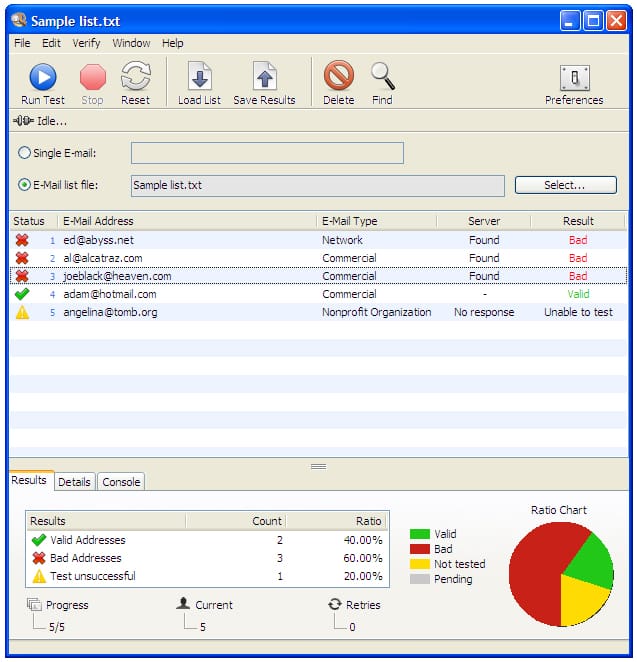
eMail Verifier can save time and money for businesses who send newsletters to their clients, nonprofit organizations who send bulletins to their members, or any person or business that needs to maintain a clean e-mail contact list.
For search intent, the strongest angles for this page are eMail Verifier review, eMail Verifier pricing, eMail Verifier alternatives, eMail Verifier setup guide, eMail Verifier performance plus archive-style searches such as old software information, official download source, compatibility notes, and replacement options. Those queries usually come from readers who already know the product name but cannot find a clear, trustworthy summary elsewhere.
Key Features and Real-World Use Cases
A good managed hosting and cloud operations tool should make the core job easier without creating unnecessary risk. For eMail Verifier, the first question is whether it handles the everyday tasks that brought you to this page. If you only need a one-time conversion, repair, scan, or export, the buying decision is different from a team that will rely on the tool every week. The best review approach is to map the product against the jobs you actually need done.
| Use case | Why it matters | What to verify |
|---|---|---|
| eMail Verifier review research for people comparing managed hosting and cloud operations tools | This is the main commercial search angle and the reason readers compare reviews. | Confirm the latest version, platform support, and whether the official product page still highlights this use case. |
| eMail Verifier pricing | Pricing searches usually come from readers who are close to making a decision. | Check current plan names, renewal pricing, free trial rules, and refund terms. |
| eMail Verifier alternatives | Alternative searches show that readers are comparing options, not just looking for a download. | Compare eMail Verifier with SiteGround, Kinsta, WP Engine and any built-in tools you already have. |
| launch a website or application | This is one of the practical jobs a buyer expects the software to handle reliably. | Test it with a non-critical sample file, account, or workflow before relying on it. |
| scale resources as traffic grows | Repeat workflows need stability, not just a feature list. | Look for batch controls, logs, previews, undo options, and support documentation. |
What Stands Out
eMail Verifier is most interesting when you want a focused tool instead of building a workaround from several separate apps. In categories like managed hosting and cloud operations, the value often comes from saving time, reducing errors, and giving non-technical users a clearer path through a task. A polished interface, reliable export options, and understandable settings can matter as much as a long feature list.
The second thing to look for is how transparent the workflow feels. Does the software show a preview before making changes? Does it explain quality settings, destination folders, or account permissions? Does it keep the original files untouched unless you choose otherwise? These details are especially important for managed hosting and cloud operations software because mistakes can cost time, data, or client trust.
eMail Verifier Availability, Pricing, and Support Notes
For archive resources, availability matters as much as price. eMail Verifier may have changed ownership, moved to a new product page, stopped receiving updates, or become part of a larger bundle. Check the official source for current download availability, supported operating systems, license terms, and whether the product is still maintained before you install anything.
Do not assume that old mentions of eMail Verifier still reflect the current product. If the official website still lists it, verify the latest version, license terms, platform support, and whether the download is served directly by the vendor. If the product appears discontinued, compare safer current alternatives before installing archived copies from third-party sites.
| Pricing question | Why it affects value |
|---|---|
| Is the official product page still live? | A live official page is the safest starting point for availability, documentation, and legitimate downloads. |
| Are updates included? | Older software pages can rank for years, but the product version, operating system support, and update policy may change. |
| Is the product still maintained? | Maintenance status affects security, compatibility, and whether the tool should be used for current work. |
| Are safer alternatives available? | A modern alternative may handle the same file type or workflow with better support and fewer security concerns. |
| Are important features locked? | OCR, batch processing, AI credits, export formats, device count, and advanced security features may sit behind higher plans. |
Pros and Cons
Potential Advantages
- Focused on managed hosting and cloud operations, so readers with a specific workflow can evaluate it quickly.
- Useful for commercial search intents such as eMail Verifier review, eMail Verifier pricing, eMail Verifier alternatives.
- May save time compared with manual workarounds when the supported formats and platforms match your needs.
- A dedicated vendor page usually gives clearer licensing, support, and update details than third-party download mirrors.
- Can be compared directly against well-known alternatives before you install or subscribe.
Possible Drawbacks
- Pricing, supported platforms, and plan limits may have changed since older references were published.
- Some tools in this category are excellent for one workflow but weak outside that narrow use case.
- Free tools or built-in operating system features may be enough for simple jobs.
- You should avoid relying on any tool for critical files until you test it with safe sample data.
- Vendor claims should be checked against independent reviews, documentation, and your own trial results.
Best eMail Verifier Alternatives to Compare
Even if eMail Verifier looks like a strong fit, alternative research is important because software categories change quickly. A buyer searching for eMail Verifier alternatives is usually trying to confirm whether the product is still competitive, whether a cheaper option exists, or whether a more modern cloud-based workflow has replaced an older desktop utility.
| Alternative | When to compare it |
|---|---|
| SiteGround | Compare SiteGround if you want a widely known benchmark in the managed hosting and cloud operations market. |
| Kinsta | Use Kinsta as a reference point for pricing, support, and current platform compatibility. |
| WP Engine | Check WP Engine when you need a second opinion on features, interface quality, and export options. |
| DigitalOcean | Consider DigitalOcean if your workflow is more advanced than the typical eMail Verifier user case. |
The goal is not to find a universally perfect tool. The goal is to find the lowest-risk tool for your exact situation. If eMail Verifier handles your files, devices, users, or compliance needs better than the alternatives, it may justify the cost. If a free or built-in tool can do the same job with less friction, that may be the smarter choice.
How to Evaluate eMail Verifier Before You Buy
Use a simple evaluation process instead of relying on marketing copy. Start by writing down the one or two jobs you need eMail Verifier to perform. Then check the official website for supported platforms, file types, limits, and current pricing. After that, test the tool with sample data that does not put important work at risk.
- Confirm the current official product page. Make sure the product is still available, actively supported, and compatible with your operating system or browser.
- Match features to your workflow. Focus on launch a website or application, scale resources as traffic grows, simplify backups and staging, reduce server maintenance overhead, not just on broad marketing claims.
- Test with a safe sample. For conversion, recovery, document, or utility software, avoid using your only copy of an important file during the first test.
- Compare the full cost. Review trial limits, renewal pricing, upgrade rights, device count, and commercial-use terms.
- Check support and documentation. Strong documentation can be the difference between a useful tool and a frustrating purchase.
Check data-center choices, uptime history, caching behavior, support response, migration rules, backup restoration, and what happens when traffic spikes.
Search Intent and Long-Tail Keyword Opportunities
This page has optimization value because rare software searches are often very specific. A reader looking for eMail Verifier review, eMail Verifier review, eMail Verifier pricing, eMail Verifier alternatives, eMail Verifier setup guide, eMail Verifier performance, or an old managed hosting and cloud operations tool may not find many clear resources. A page that explains current availability, official-source checks, use cases, and replacement options can satisfy that long-tail intent better than a thin download listing.
A strong archive resource for eMail Verifier review should answer what the product was used for, whether an official source still exists, what compatibility issues to check, and which alternatives are safer today. This is also better for AdSense review because it adds original editorial guidance instead of merely pointing to a file or repeating an old vendor blurb.
Who Should Use eMail Verifier?
eMail Verifier is most useful for readers who need to identify an older tool, understand what it was designed to do, recover workflow context, or compare it with current software. It may also help people who have old project files, legacy business processes, or archived documentation that mentions the product by name.
You should be careful if eMail Verifier no longer shows active updates, if the official download has disappeared, or if only third-party mirrors remain. Old utilities can still be useful, but compatibility, security, and license clarity matter. Keep backups, test in a controlled environment, and prefer maintained alternatives when the old tool is not required.
eMail Verifier FAQ
Is eMail Verifier worth it?
eMail Verifier is worth researching if you need information about an older or niche managed hosting and cloud operations tool. It is only worth using for current work if the official source, compatibility, and support situation still look trustworthy.
Does eMail Verifier have a free trial?
It may or may not have a current trial. For old or niche software, first verify whether the official website still maintains the product and whether the download is current.
What are the best eMail Verifier alternatives?
Good alternatives to compare include SiteGround, Kinsta, WP Engine, DigitalOcean. The best choice depends on your budget, operating system, file formats, support needs, and whether you prefer a desktop tool or cloud workflow.
Is eMail Verifier safe to download?
Use the official website whenever possible, avoid unofficial mirrors, keep a backup of important files, and scan downloads with your usual security tools. For security, recovery, system utility, and migration software, test with non-critical data first.
Archive and Alternative Research Paths
eMail Verifier may be useful as an older or niche software reference. If current vendor information is limited, use these related Augesoft guides to compare similar tools, newer alternatives, and broader software categories before downloading or buying.