
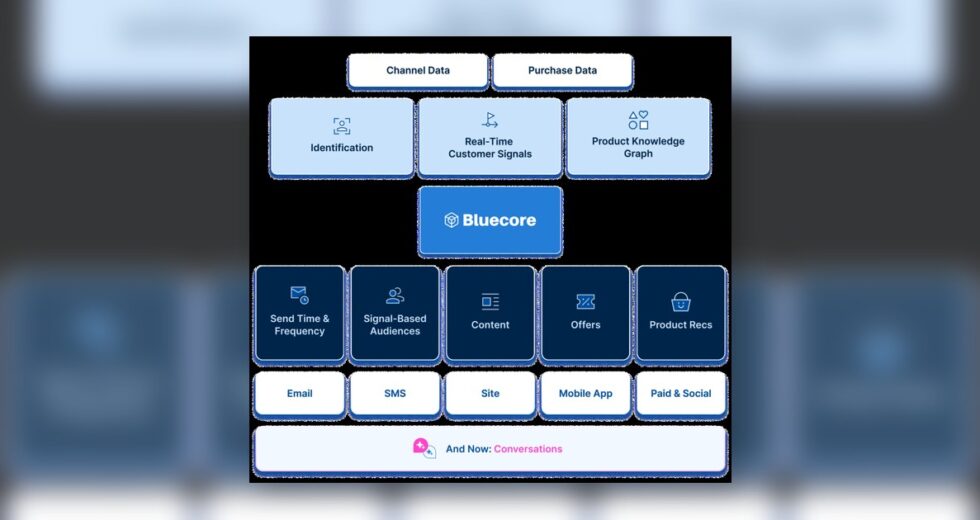

Bluecore sits in the AI retail marketing category, a narrower AI software market than general chatbots or broad productivity assistants. That niche matters because buyers are usually searching with operational intent: they want to know whether the product can support a real workflow, what kind of team it fits, which alternatives deserve a demo, and what risks should be checked before rollout.
This review looks at Bluecore from the perspective of retail marketing and lifecycle teams. Instead of treating it like a generic AI tool, the article focuses on customer activation and personalization, buying criteria, implementation questions, and the kind of long-tail use cases that normally decide whether a tool becomes useful in production.
Because Bluecore pricing, packaging, and model capabilities can change quickly, this page avoids quoting fixed plan prices unless they are confirmed directly by the vendor. Use the official website for the latest plan details, but use this review to understand the questions worth asking before booking a demo or starting a trial.
For Bluecore, Retail AI should be tested against merchandising rules, catalog quality, user privacy, and measurable business outcomes.
| Software | Bluecore |
|---|---|
| Category | AI retail marketing |
| Best fit | retail marketing and lifecycle teams |
| Main workflow | customer activation and personalization |
| Primary keyword angle | how to use Bluecore |
| Best buyer search intent | AI ecommerce software |
| Official site | https://www.bluecore.com |
How to implement Bluecore without overcomplicating the rollout
A practical Bluecore implementation should start with one workflow, one team, and one measurable goal. Trying to automate every process at once makes it harder to see whether the software is actually improving work.
- Map the current customer activation and personalization process and identify the manual steps that create delays.
- Choose a small pilot group from retail marketing and lifecycle teams rather than rolling the tool out to everyone at once.
- Prepare clean Bluecore sample data, approved documents, or representative tasks for testing.
- Run Bluecore alongside the current process and compare speed, quality, and review effort.
- Document where Bluecore output is useful, where it needs correction, and where it should not be used.
- Create Bluecore approval rules, escalation paths, and reporting dashboards before expanding the rollout.
The best Bluecore pilots produce evidence. Track time saved, error rates, review effort, adoption, and qualitative feedback from the people who use the tool daily. If a vendor cannot help you design a measurable pilot, that is a warning sign.
What Bluecore is best used for
The strongest use case for Bluecore is not simply 'using AI.' It is applying AI to customer activation and personalization where the work is repetitive, document-heavy, time-sensitive, or difficult to scale with manual labor alone.
- Replacing manual review steps in customer activation and personalization with a faster AI-assisted first pass.
- Helping retail marketing and lifecycle teams standardize repetitive decisions without removing human review.
- Creating a more searchable Bluecore record of documents, conversations, tasks, or operational signals.
- Reducing the time between raw input and a usable customer activation and personalization draft, summary, recommendation, or next action.
- Improving Bluecore visibility by connecting AI output to reporting, audit trails, and workflow tools.
- Giving retail marketing and lifecycle teams a way to compare performance across teams, locations, projects, or accounts.
When evaluating Bluecore use cases, look closely at catalog enrichment, search relevance, personalization controls, then test A/B testing, platform integration, merchandising rules. The product can look impressive in a demo but still fail if it does not match the data, permissions, review process, and day-to-day habits of the team.
Bluecore feature areas to evaluate
A good AI retail marketing review should separate product positioning from operational fit. The following feature areas are the ones that usually matter most for retail marketing and lifecycle teams.
| Catalog Enrichment | Check how Bluecore handles catalog enrichment in a live workflow, not only in a sales demo. |
|---|---|
| Search Relevance | Check how Bluecore handles search relevance in a live workflow, not only in a sales demo. |
| Personalization Controls | Check how Bluecore handles personalization controls in a live workflow, not only in a sales demo. |
| A/B Testing | Check how Bluecore handles A/B testing in a live workflow, not only in a sales demo. |
| Platform Integration | Check how Bluecore handles platform integration in a live workflow, not only in a sales demo. |
| Merchandising Rules | Check how Bluecore handles merchandising rules in a live workflow, not only in a sales demo. |
Do not evaluate Bluecore only with marketing pages. Ask for examples, test with real sample data, and confirm which features are available in the plan you are considering. Many AI products reserve advanced controls, analytics, or integrations for higher tiers.
Bluecore workflow checklist
- Define the Bluecore workflow owner before the pilot starts.
- Choose a narrow customer activation and personalization use case with measurable before-and-after data.
- Prepare approved Bluecore source material, sample tasks, or representative operational data.
- Document which Bluecore outputs require human approval.
- Train users on what Bluecore should and should not be used for.
- Review Bluecore performance after two weeks and again after the first full operating cycle.
Bluecore pricing: what to check before you buy
Pricing for niche AI software is often more complex than a simple monthly subscription. Some vendors price by seat, volume, workflow, data source, usage, implementation package, or enterprise contract. For Bluecore, the safest approach is to treat public pricing as a starting point and confirm the real cost with the vendor.
Ask whether onboarding, integration, security review, data migration, workflow design, or premium support is included. For retail marketing and lifecycle teams, the hidden cost is often not the license itself; it is the time required to connect Bluecore to the systems where work already happens.
- Is there a Bluecore free trial, pilot, or proof-of-concept option?
- Are key Bluecore integrations included or priced separately?
- Is Bluecore usage limited by seats, credits, documents, conversations, or processed records?
- What support level is included during a Bluecore rollout?
- Can the Bluecore contract be expanded gradually after a smaller pilot?
- What happens to exported Bluecore data if the team cancels?
For Bluecore buyer research, pricing searches can attract strong long-tail traffic because searchers are already close to evaluation. A useful pricing article should explain the cost variables rather than pretending every buyer will see the same price.
Bluecore alternatives
If Bluecore looks promising, compare it with a few tools in the same category before making a final decision. The best alternative is not always the product with the broadest feature list; it is the one that matches your workflow, budget, implementation timeline, and team maturity.
- Lily AI: worth comparing against Bluecore if you need another option in AI ecommerce software.
- Constructor: worth comparing against Bluecore if you need another option in AI ecommerce software.
- Algolia NeuralSearch: worth comparing against Bluecore if you need another option in AI ecommerce software.
- Dynamic Yield: worth comparing against Bluecore if you need another option in AI ecommerce software.
- Bloomreach: worth comparing against Bluecore if you need another option in AI ecommerce software.
During an alternatives comparison, create a short scorecard. Give each product the same sample task, the same data, and the same review criteria. For Bluecore, include at least one test around customer activation and personalization, one around reporting, and one around exception handling.
How to validate Bluecore with a real pilot
A useful Bluecore pilot should be narrow enough to finish, but realistic enough to expose operational friction. For retail marketing and lifecycle teams, the best first test is usually one repeatable workflow inside customer activation and personalization where the team already knows the current baseline.
Before the pilot starts, write down what a good result means. That may include faster turnaround, fewer manual steps, better coverage, stronger reporting, or a lower error rate. The important point is to compare Bluecore against the current process, not against a vendor demo built from ideal examples.
| Pilot scope | Use one clear customer activation and personalization process, one owner, and one success metric. |
|---|---|
| Sample data | Include normal examples, incomplete examples, difficult edge cases, and examples that should be rejected. |
| Review model | Decide which parts of the Bluecore output can be accepted automatically and which need human approval. |
| Success signal | Measure catalog enrichment, search relevance, personalization controls before deciding whether to expand. |
Controls and rollout questions for Bluecore
The strongest buyers do not treat AI software as a magic layer. They ask how Bluecore fits into permissions, data handling, approval paths, quality review, and reporting. This matters especially for retail marketing and lifecycle teams because the tool has to support daily work after the first enthusiastic demo is over.
- Confirm who owns configuration, data access, and admin changes for Bluecore.
- Ask how the product handles errors, missing data, disputed output, and unusual customer activation and personalization cases.
- Check whether Bluecore exports, logs, and reports are useful enough for managers and reviewers.
- Document what the team should do when Bluecore output looks plausible but cannot be verified.
- Use the same scorecard when comparing Bluecore with alternatives in AI ecommerce software.
If these controls are vague, the product may still be interesting, but it is not ready for a broad rollout. A smaller pilot gives the team time to understand whether Bluecore improves work or merely adds another system to manage.
What searchers usually want to know about Bluecore
People searching how to use Bluecore are usually closer to implementation than discovery. They need a workflow sequence, a pilot checklist, and a way to decide whether Bluecore is improving customer activation and personalization or only creating attractive output.
For that reason, this Bluecore guide focuses on buyer intent: what to test, what to ask the vendor, what to compare, and where a team should slow down before making a long-term commitment.
Final buyer notes for Bluecore
One practical question to ask is: Does it improve discovery for your catalog? The answer matters because Bluecore will only create durable value when the team can connect vendor promises to actual daily work, measurable results, and a review process that people trust.
One practical question to ask is: How quickly can merchandisers control results? The answer matters because Bluecore will only create durable value when the team can connect vendor promises to actual daily work, measurable results, and a review process that people trust.
One practical question to ask is: What ecommerce platforms are supported? The answer matters because Bluecore will only create durable value when the team can connect vendor promises to actual daily work, measurable results, and a review process that people trust.
One practical question to ask is: Can it prove revenue lift? The answer matters because Bluecore will only create durable value when the team can connect vendor promises to actual daily work, measurable results, and a review process that people trust.
For many buyers, the smartest path is a small pilot. Choose one measurable problem, define success before the demo, and compare Bluecore against at least two alternatives. That process will usually reveal more than a feature checklist alone.
Bluecore FAQ
What is Bluecore used for?
Bluecore is used for customer activation and personalization in the AI retail marketing category. It is most relevant for retail marketing and lifecycle teams that need a focused AI workflow rather than a broad chatbot.
Is Bluecore better than a general AI assistant?
It can be, if your main problem is customer activation and personalization. General AI assistants are flexible, but niche software usually adds domain workflow, integrations, permissions, analytics, and review controls.
Does Bluecore publish fixed pricing?
Bluecore pricing can change and may depend on seats, usage, workflow, contract size, or implementation needs. Confirm the latest pricing directly with the vendor.
What should I compare before choosing Bluecore?
For Bluecore, compare catalog enrichment, search relevance, personalization controls, A/B testing, plus onboarding effort, support, security documentation, and proof from a pilot project.
Who should not use Bluecore?
Teams without a clear customer activation and personalization process may struggle. AI software works best when the team knows what good output looks like and can review it consistently.
Is Bluecore safe for regulated work?
Bluecore safety depends on the deployment, controls, and industry requirements. Review security, privacy, audit logs, permissions, data retention, and human approval workflows before production use.
Bluecore official website: Use the vendor site to confirm current pricing, demos, integrations, and security documentation.
Editorial note: This article is a software review and buying guide for Bluecore. It is not medical, legal, financial, insurance, HR, educational, or operational advice. Always confirm current product capabilities, pricing, compliance documentation, and contract terms with the official vendor.